If you have ever published a blog post or landing page that never ranked despite your best efforts, search intent is likely the culprit. Search intent - also called user intent or query intent - refers to the underlying goal a person has when they type a phrase into Google. Understanding what is search intent and why it matters for SEO rankings is no longer optional for businesses that want to compete online. Google has invested billions into understanding intent, and its algorithm now rewards content that matches what searchers actually want, not just content that repeats a keyword. At RAH Operations, we build every SEO strategy around intent from day one.
The Four Core Types of Search Intent
Google and SEO professionals generally recognize four primary categories of search intent. Informational intent covers searches where the user wants to learn something, such as how to fix a credit score or what digital marketing includes. Navigational intent happens when someone is looking for a specific brand or website, like searching for a company by name. Commercial investigation intent applies when a user is comparing options before making a decision, such as searching for the best SEO agency in Scottsdale. Finally, transactional intent signals that the user is ready to take action - they want to buy, book, or sign up right now. Each type demands a completely different content format, tone, and call to action. Matching your page to the correct intent category is the single most important on-page SEO decision you can make. Misalign the two and Google will simply rank a competitor whose content better satisfies what the searcher actually wanted.
Why Google Prioritizes Intent Over Keywords Alone
For years, SEO was treated as a keyword density game. Stuff the right phrase into a page enough times and rankings would follow. That era is over. Google's BERT and MUM algorithm updates fundamentally changed how the search engine reads content. Instead of matching strings of text, Google now interprets the meaning and purpose behind a query. This means two pages targeting the same keyword can perform very differently based on how well each one satisfies the searcher's actual need. A page targeting the phrase credit repair that reads like a sales pitch will lose to a page that genuinely explains the credit repair process, because most people searching that phrase are in the informational or commercial investigation stage, not the transactional stage. Our team at RAH Operations audits intent alignment for every page we optimize, which is why our clients consistently see ranking improvements within the first 90 days. If you want to see how your current pages stack up, explore our SEO and website design services for a full content audit.
How to Identify the Right Intent for Your Target Keywords
Identifying intent starts with reading the search engine results page, or SERP, for your target keyword. Look at the top five organic results. Are they blog posts, product pages, comparison articles, or local service pages? The format Google chooses to rank tells you exactly what type of content it believes satisfies that query. Next, analyze the language in the titles and meta descriptions of those top results. Are they using words like learn, guide, or how to? That signals informational intent. Are they using words like best, top, or compare? That signals commercial investigation. Are they using words like buy, get started, or schedule? That signals transactional intent. You can also use tools like Google Search Console to see which queries are already driving impressions to your pages, then evaluate whether your content actually matches the intent behind those queries. For businesses running paid campaigns alongside organic SEO, intent alignment is equally critical. Our digital marketing team ensures your ad copy and landing pages speak directly to where the searcher is in their buying journey.
Search Intent and Local SEO in Arizona
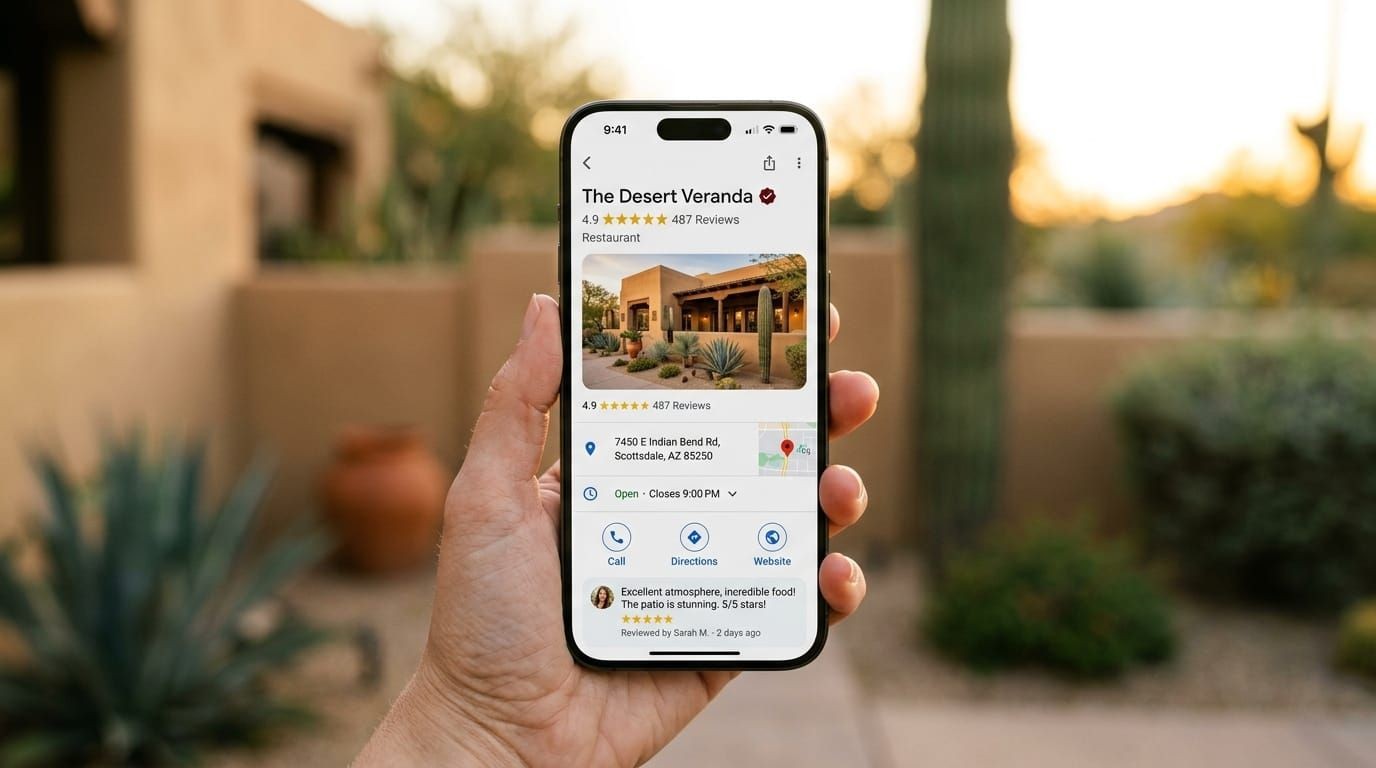
For Arizona businesses, search intent takes on an additional layer of complexity because local searches carry geographic intent baked in. When someone in Phoenix searches for web design agency near me or Scottsdale SEO company, they are expressing transactional or commercial investigation intent combined with a strong local signal. Google interprets these searches differently than national queries and surfaces results from its local pack, Google Business Profiles, and locally optimized pages. To rank for these searches, your content must satisfy both the topical intent and the local intent simultaneously. That means your service pages need to speak directly to Arizona customers, reference local context where relevant, and be supported by a fully optimized Google Business Profile. It also means your website architecture needs to be clean and fast, because local searchers on mobile devices will bounce immediately if your site loads slowly. Our website design and SEO services are built specifically for Arizona businesses that want to dominate local search results across Scottsdale, Phoenix, Tempe, and the surrounding metro area.
Aligning Your Content Strategy With Search Intent
Once you understand the intent behind your target keywords, you need to build a content strategy that maps each piece of content to the right intent stage. Informational content like blog posts, guides, and FAQs should target users in the awareness phase who are researching a problem. Commercial investigation content like comparison pages, case studies, and service overviews should target users who are evaluating their options. Transactional content like service pages, intake forms, and landing pages should target users who are ready to act. A common mistake Arizona businesses make is creating only one type of content and expecting it to rank for all intent types. A single homepage cannot rank for both how does SEO work and hire an SEO agency in Scottsdale because those queries represent completely different intent stages. Building a layered content strategy that addresses all stages of the buyer journey is how you capture traffic at every point in the funnel. Our social media management team also uses intent data to craft platform-specific content that meets audiences where they are in their decision-making process.
The Business Impact of Getting Search Intent Right
When your content aligns with search intent, the results are measurable and significant. Pages that match intent earn higher click-through rates from the SERP because their titles and descriptions speak directly to what the searcher wants. Once on the page, visitors stay longer, engage more deeply, and convert at higher rates because the content delivers exactly what they came for. Google tracks these behavioral signals - dwell time, bounce rate, and click-through rate - and uses them as ranking factors. This creates a compounding effect where intent-aligned content ranks higher, earns more clicks, generates better engagement, and then ranks even higher as a result. For businesses dealing with financial challenges, this same principle applies to credit-related searches. Whether you are looking to improve personal credit or secure business funding, the content you find and trust is content that matched your intent. Learn more about how we approach this through our personal credit repair services and our business credit and funding programs, both of which are supported by intent-driven educational content that builds trust before asking for a commitment.
Frequently Asked Questions About Search Intent and SEO
Does search intent change over time?
Yes. Search intent can shift as industries evolve, new products emerge, or user behavior changes. A keyword that once carried informational intent may shift toward transactional intent as a topic becomes more mainstream. This is why ongoing SEO monitoring and content updates are essential. RAH Operations reviews intent alignment quarterly for all managed SEO clients to ensure content stays relevant and competitive.
Can one page rank for multiple types of search intent?
In rare cases, a single page can satisfy both informational and commercial investigation intent if it is structured correctly. However, trying to force a single page to serve transactional and informational intent simultaneously usually results in a page that satisfies neither. The better approach is to create separate, purpose-built pages for each intent stage and link them together strategically within your site architecture.
How does search intent affect paid advertising?
Search intent is just as critical for paid search as it is for organic SEO. Sending a user with informational intent to a hard-sell landing page will result in high bounce rates and wasted ad spend. Effective paid campaigns match ad copy to intent and send users to landing pages that deliver exactly what the ad promised. Our digital marketing team builds intent-matched campaigns that lower cost per acquisition and improve conversion rates for Arizona businesses.
Understanding search intent is the foundation of every high-performing SEO strategy, and it is one of the most overlooked factors by businesses trying to rank on their own. If your website is not generating the organic traffic and leads your business deserves, the problem is almost certainly an intent mismatch somewhere in your content. RAH Operations specializes in diagnosing and fixing exactly these issues for Arizona businesses across every industry. Whether you need a full SEO overhaul, a new website built around intent-driven architecture, or a complete digital marketing strategy, we are ready to help. Start with a free strategy session today and let our team show you exactly where your content is leaving rankings and revenue on the table.